8th September 2026 | By Admin
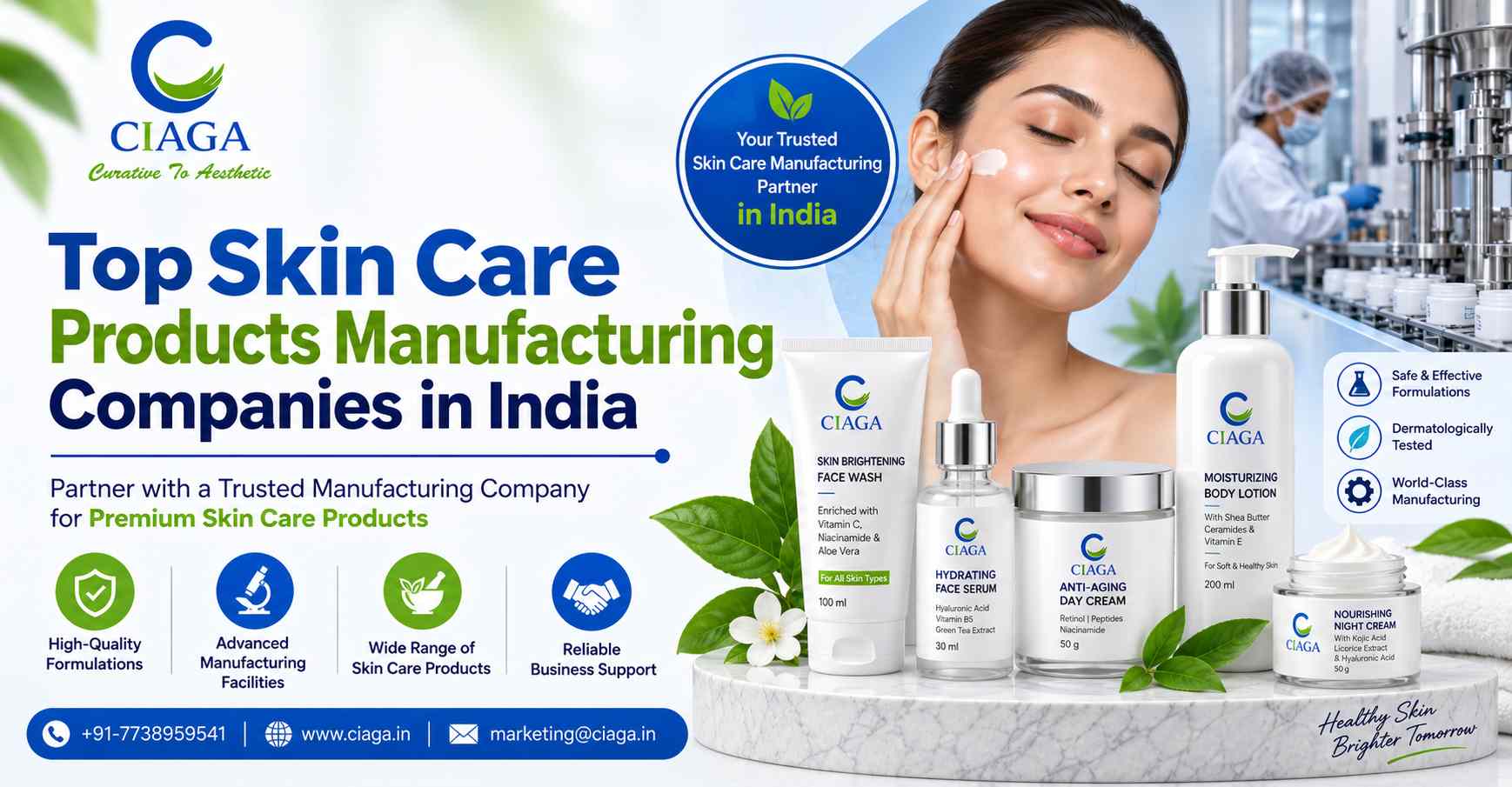
The skin care manufacturing companies in India have emerged as one of the most vibrant sectors within the country's personal care sector owing to increased consumer demand for dermatologically tested, natural, and outcome-based formulations. In the past decade, India has emerged as the global source for both cosmetics and skin care owing to its low manufacturing costs, robust regulatory environment through the Drugs and Cosmetics Act, and access to qualified formulators. Entrepreneurs, dermatologists and D2C brands have opted to team up with existing manufacturers rather than investing in their own manufacturing facility due to lower capital expenditure requirements and product quality assurance. The following post discusses the criteria that determine a reliable manufacturing partner, different models of production, and selecting the right manufacturing partner.
Understanding the Role of Skin Care Manufacturing Companies in India
In essence, skincare manufacturing refers to outsourcing the formulating, manufacturing and often the packaging of skin products in a specialized facility rather than building a plant. It is the heart of the entire skincare business, and needs to be defined and clearly understood before making comparisons between different companies. A Manufacturer for Skincare normally has WHO-GMP and ISO certified facilities with automation in filling lines, in house Quality Control laboratories and Research and Development team that formulate products such as facial wash, creams, serums, sun blocks, special derma range and more. The brand will present a concept or requirement and the manufacturing partner takes care of the rest from sourcing raw materials through testing and shipping of the finished goods. It is what has made it possible for individuals, entrepreneurs, clinics and dermatologists to manufacture their own line of skincare products without owning a single machine.
Reliability of Skin Products Manufacturers normally depends on some measurable parameters, such as the level of certification, flexibility of the minimum order quantity, formulation library, lead time, and after-sales documentation in regards to the regulatory filings. Those manufacturers who provide transparency in the batch record and stability testing usually have good relations with brand owners because such documentation becomes very important in the audit or export of the product.
At the same time, it is beneficial when the brand owner is considering a Manufacturer for Skincare to pay a personal visit to the manufacturing site or ask the manufacturer for a video tour of the filling room. Such a visit gives much more information regarding the actual standard of the manufacturing process rather than certificates and can prevent any unpleasant surprises in regard to bulk manufacture.
Types of Manufacturing Partnerships Brands Can Choose
Each brand does not require the same manufacturing setup, and knowing how they differ aids in identifying the most appropriate one depending on your company's stage and budget.
Private Label Skin Care Manufacturers
Private Label Skin Care Manufacturers provide pre-formulated products for labelling under the company's own branding. It is useful for new companies that want to go to market quickly without spending much time developing a formulation. In Best Private Label Skin Care Manufacturers, you will always find a list of 100+ SKUs including cleansers, moisturizers, masks, serums, along with customizable fragrance, colour, and packaging.
Contract Skincare Manufacturer Model
The contract skincare manufacturer model, however, formulates a product based on the brief provided by the brand. The brief could be for developing a certain percentage of an active ingredient or even a specific texture of a product such as anti-pigmentation or barrier repair creams.
Derma Third Party Manufacturing
Derma Third Party Manufacturing is yet another type that differs from the above types but deals with clinically based, dermatologist-recommended products like medicated creams, acne preparations, etc. Since the products may be classified as drugs or cosmeceuticals, they will need additional documentation, stability and a license for production.
What to Evaluate Before Signing with a Skincare Manufacturer in India?
Choosing the best Skincare Manufacturer is one of the most significant decisions that a brand in this industry needs to take, as the quality of products will decide how much success it gets and its ability to retain customers. Some practical considerations should matter more than impressive brochures:
Certification: WHO-GMP, ISO 22716 (Cosmetics GMP) and, wherever necessary, Ayush/FDA certification for medicinal variants.
Testing: Microbiological, stability, and Dermatological (patch tests) facility on site as opposed to only outsourcing.
Ingredient disclosure: The manufacturer's willingness to provide a full list of ingredients and active content.
Minimum Order Quantity: Most Skin Care Products Manufacturers today have minimum orders as low as 500-1,000 units per SKU, thus making it possible for small brands to launch their products.
Package and export compliance services: Legal metrology labelling and barcode registration, along with export documentation, wherever required.
Those beauty brands that ignore the above process will often end up knowing about the quality issues only after having manufactured several batches of products.
Derma Products Manufacturer: A Specialised Segment Worth Understanding
A Derma Products Manufacturer is unique in its working style compared to a regular cosmetic company since the products are always made with active concentrations which must be justified by scientific reasons, not simply marketing claims. For example, salicylic acid, niacinamide, azelaic acid, and retinoids, among other things, need careful balancing of their pH value and stability testing to ensure their efficacy and safety throughout the lifespan of the product. A reputable Derma Products Manufacturer usually has formulation chemists with a pharmaceutical background, stability chambers, and even clinical or in vitro testing data supporting its products' claims. In India, this sector is expanding very fast, since even dermatologists themselves start making clinic brands for skin care, and people are increasingly concerned about the ingredients, reading INCI lists as if they used to read food labels.
When considering partnering with a Derma Products Manufacturer, it might be wise to consider the fact that derma products are normally at the crossroads of cosmetics and drugs, so using a manufacturer familiar with the two types of products can minimize the compliance risk. Brands must also make sure that they get samples or references from any prospective Derma Products Manufacturer as this is the easiest method of gauging their suitability for producing consistent products.
Why Private Label and Contract Manufacturing Are Growing Fast in India?
The skincare manufacturing industry in India has seen success thanks to a combination of favourable conditions like a ready availability of skilled cosmetic chemists, comparatively low manufacturing cost against that of Western markets, and government schemes to aid the local personal care manufacturing industry. As a result of all of this, even foreign buyers have started to approach Indian Skin Care Manufacturing Companies for manufacturing private label products which target the market of the Middle East, Africa and South East Asia.
Frequently Asked Questions
Q1. How do I check if the manufacturer is really WHO-GMP certified?
Request the latest certificate of that along with the validity period and issuing agency, and cross-check the certificate number through the relevant state licensing agency’s database prior to signing the manufacturing agreement.
Q2. What is the usual MOQ of a skincare product range?
This will vary according to the manufacturer and the type of product formula, but most Indian manufacturers will allow a minimum order quantity from 500 to 1,000 pieces per SKU for new skincare brands.
Q3. Is private labelling viable for derma and medicinal skin care?
Private labelling works great for normal cosmetic ranges, but when it comes to medical or derma skin care products, you need to opt for contract manufacturing.
Conclusion
The selection of an appropriate manufacturer is not just a procurement decision; it is an ongoing relationship that determines product quality, regulatory compliance, and ultimately, reputation among consumers. Whatever approach is used, whether it is through private labelling for quick turnaround, contract manufacturing for proprietary formulations, or dermatological manufacturers for the science behind the ingredients, the fundamentals are the same: certification, formulations, and batch-to-batch consistency. With the increasing sophistication of the skincare manufacturing industry in India, it is common for brands to take the time at the sourcing level and end up with something worth their while.
Must Read: Best Derma PCD Franchise Company in Hyderabad